
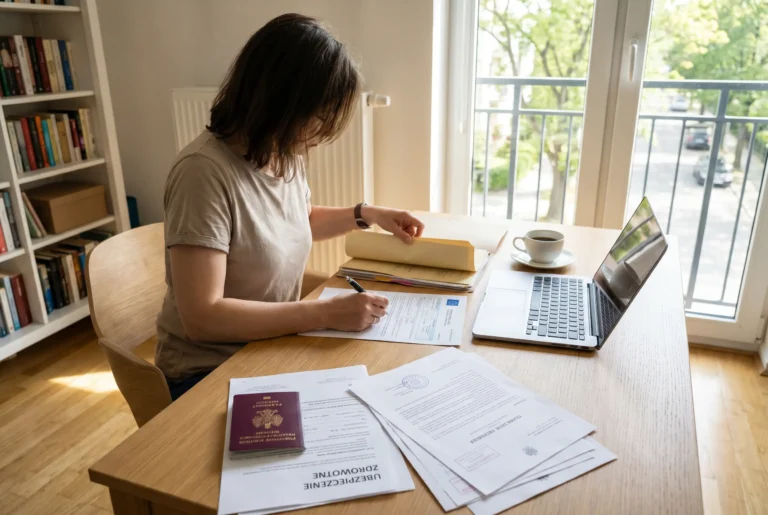
Prescriptions in Poland This is a document that allows a person to purchase prescription medications, even if the patient is a foreign national. A prescription for a foreigner in Poland can be in paper or electronic form, and how it is filled depends, among other things, on the patient’s information, PESEL number, identification document, and eligibility for reimbursement. In this article, we explain how to buy medications at a pharmacy, how e-prescriptions work, when medication reimbursement is possible, and what to do if you don’t have a PESEL number.
What is a prescription for a foreigner in Poland?
A prescription for a foreign national in Poland is a prescription issued to a person who does not hold Polish citizenship but receives medical care within Poland. It can be issued by a doctor at a public or private clinic, during an in-person visit, or as part of a telemedicine consultation. From the pharmacy’s perspective, the most important factors are whether the prescription was issued correctly and how the patient can verify their identity.
In practice, a foreign national can receive a prescription with or without a PESEL number. If they have a PESEL number and active contact information, an e-prescription is often the most convenient option. If they do not have a PESEL number, the doctor can use other identifying information, such as a passport number or another document. That is why it’s a good idea to have your identification document and contact information ready in advance.
The topic of prescriptions is also linked to the right to medical treatment and health insurance. A person insured through the National Health Fund (NFZ) may have access to public health services and reimbursed medications. On the other hand, a patient seeking private care can receive a prescription, but not every situation results in an automatic reimbursement. You can read more about the public system in the guide NFZ and Social Security for foreigners.
💡 Important Tip
If you don't have a PESEL number, bring your passport or residence card to your appointment. The doctor may need this information to properly fill out a prescription.
How do I get a prescription in Poland?
To get a prescription, you must first consult a doctor. This can be a primary care physician, a specialist, or a private practitioner. During the visit, the doctor assesses your health, diagnoses the problem, and decides whether a prescription is necessary. Foreign nationals should provide their personal information, present a valid ID, and disclose any previous treatment and medications they are currently taking.
Prescriptions are increasingly being issued electronically. An e-prescription is a digital form of a prescription that a patient can receive via text message, email, or as a printout. In practice, a four-digit code and a PESEL number are usually required to fill an e-prescription. In some situations, a foreign national may also use an identity document, and the identification information must match that entered by the doctor.
If you're just starting to arrange medical treatment in Poland, you might also find this article helpful, how to find a doctor without NFZ. This is especially important when you need quick advice and want to know how to buy medications in accordance with Polish regulations.
PESEL and a prescription
The relationship between the PESEL number and prescriptions is a common question among foreigners. The PESEL number alone does not entitle you to free medications, but it greatly simplifies the process of using e-prescriptions and the Online Patient Account. It also makes it easier to send the prescription code via text message and to verify your information at the pharmacy more efficiently.
Not having a PESEL number does not prevent you from receiving medical treatment. The key is to correctly identify the patient in the medical records. In many cases, the doctor can use the foreign national’s passport number or another form of identification. However, it’s a good idea to check with the facility before your visit to find out what information will be needed.
How do I buy medicine at a pharmacy?
How you purchase medications depends on the type of prescription. With a paper prescription, the patient presents the document at the pharmacy, and the pharmacist dispenses the medication according to the prescription. With an e-prescription, a four-digit code and a PESEL number are usually provided. However, data from insurance practices show that, in the case of foreign nationals, the pharmacy may also require a passport or other form of identification if the prescription has been linked to such a document.
It’s important to remember that not all medications are available immediately. The pharmacy may need to order some medications, and others have equivalents. The pharmacist may suggest a substitute if it complies with the prescription and regulations. Always check the medication’s name, dosage, fulfillment time, and price after any applicable reimbursement.
If you have private health insurance, the rules for reimbursement of medication costs depend on your policy. Insurance documents often include a requirement to keep copies of the prescription, invoice, and proof of payment. Some policies cover only specific situations, such as continuing treatment or purchasing medications prescribed in Poland. It will also be helpful to compare private and National Health Insurance.
What should I bring to the pharmacy?
💡 Practical advice
If you plan to file a claim for reimbursement under your insurance policy, ask the pharmacy for an invoice made out in your name. A receipt alone is often not enough to settle the claim with your insurer.
When are you eligible for a prescription drug reimbursement?
Drug reimbursement in Poland does not depend on citizenship, but on the patient’s eligibility and whether the drug in question is on the reimbursement list. A foreign national may pay less for a medication if they are eligible for publicly funded benefits and the doctor has correctly indicated that eligibility on the prescription. This most often applies to people covered by the National Health Fund (NFZ), such as those working legally, registered for insurance, or meeting other eligibility requirements for the system.
It is important to distinguish between government reimbursement and reimbursement from private insurance. The National Health Fund (NFZ) reduces the price directly at the pharmacy if the medication is reimbursable. Private insurers usually operate differently: the patient purchases the medication on their own and then submits a claim for reimbursement. Policy documents often include a requirement to provide copies of the prescription, invoice, and proof of payment, as well as an exclusion for costs already covered by the NFZ.
In practice, this means that one person can use two different reimbursement mechanisms, but not for the same portion of the cost. If the National Health Fund (NFZ) has covered part of the cost, a private insurer usually does not reimburse that same amount. If you’re interested in residency formalities related to health care, see also the guide on insurance for residence card.
When is a refund not possible?
A problem arises when a patient is not eligible for public benefits, the prescription was issued without the proper markings, or the medication is not on the reimbursement list. Reimbursement under a private insurance policy may also be denied if the medication was purchased outside of Poland, without the required documentation, or outside the scope of coverage. Therefore, before making a purchase, it’s a good idea to check both the National Health Fund’s (NFZ) rules and the terms of your insurance policy.
Frequently asked questions
Can a foreigner get a prescription in Poland?
Yes, a foreigner can obtain a prescription in Poland after consulting a doctor. The prescription can be either paper or electronic. The doctor must properly identify the patient based on their personal information and identification document.
Can you get an e-prescription without a PESEL number?
In many situations, not having a PESEL number makes it difficult to fill an e-prescription, but it does not always prevent it. Much depends on how the patient is identified in the system and the information entered by the doctor. Therefore, before your appointment, it’s best to ask the facility whether the prescription can be issued using your passport.
How can I buy medicine at a Polish pharmacy as a foreigner?
To purchase medication, you must present a paper prescription or provide the e-prescription code and your identification information. Depending on the situation, the pharmacy may ask for your PESEL number or passport number. If you want to be better prepared for your visit, check out Healthcare Rights of Foreign Nationals.
Is a foreigner entitled to a prescription drug reimbursement?
Yes, but only if they meet the eligibility requirements for public benefits or have the appropriate legal entitlement. Nationality alone does not determine whether medications will be reimbursed. What matters is insurance status, the type of medication, and whether the prescription is properly issued.
How does a reimbursement from the National Health Fund differ from a reimbursement under an insurance policy?
Reimbursement from the National Health Fund (NFZ) reduces the price of the medication right at the pharmacy. Reimbursement from a private insurance policy usually occurs after the purchase, once the claim and supporting documents have been submitted. As a rule, the insurer does not cover the portion of the cost that has already been covered by the NFZ.
What documents should I keep for reimbursement of medication costs?
It’s best to keep a copy of the prescription, the personalized invoice, and the payment receipt. Under many insurance policies, these documents are the basis for reimbursement. It’s also a good idea to keep the doctor’s instructions if the medication was part of ongoing treatment.
Summary
Prescriptions for foreigners in Poland are available through both the private and public healthcare systems, but how they are filled depends on the patient’s information and eligibility. The most important things are to have an ID, check whether e-prescriptions are available, and find out if you’re eligible for a reimbursement from the National Health Fund (NFZ) or a refund from your insurance policy. If you want to receive medical treatment in Poland without any issues, make sure you have adequate health insurance and all the necessary documents before your appointment.







 Polish
 English
 Ukrainian
 Turkish
 Russian
 Indonesian
 Vietnamese
 Spanish